Taiwanese Mahjong · 1 tai
Win After a Kong (Gang Shang Kai Hua) in Taiwanese Mahjong: Tai, Rules and Odds
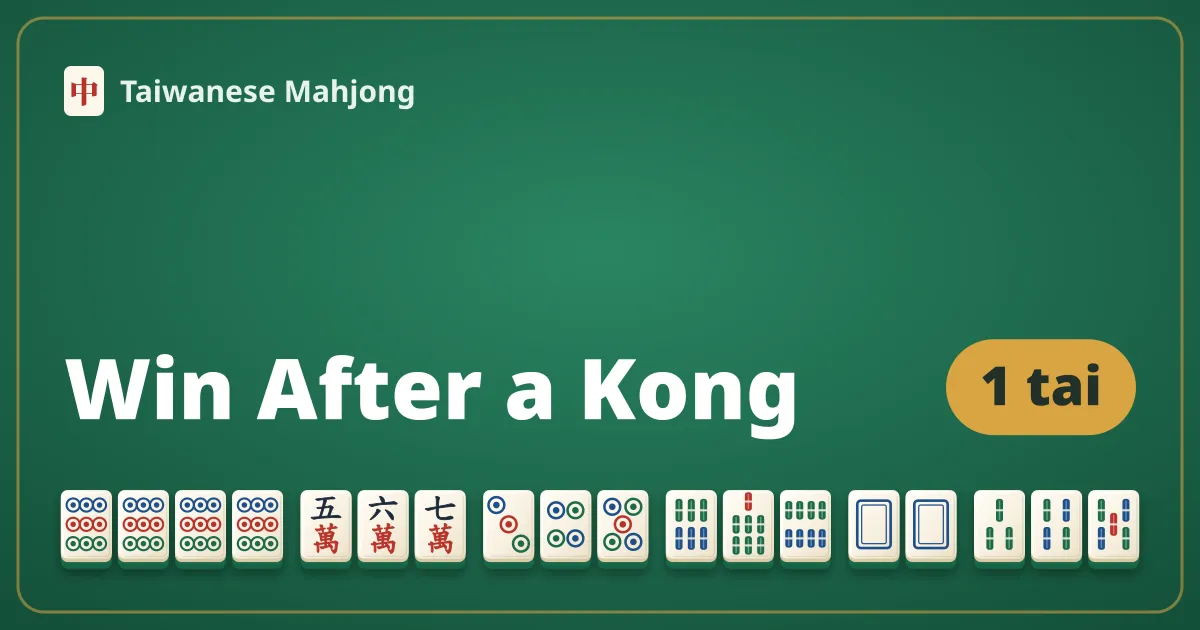
In Taiwanese mahjong, Win After a Kong (槓上開花, gang shang kai hua) is worth 1 tai: you declare a kong (or reveal a flower), take a replacement tile from the back of the wall, and that tile completes your hand. It is always a self-draw, so self-draw or concealed self-draw tai are added too.
On this page
The rules for Win After a Kong
- You declared a kong: concealed, exposed (on a discard) or added to a pung — all count
- After a kong you draw a replacement from the back of the wall, and you self-draw your win on that tile
- On this site flowers count too: reveal a flower, draw a replacement from the back, win on it — same tai
- If the replacement is another flower, you replace again; the tile that finally wins still counts
How Win After a Kong is scored
Win After a Kong is a kind of self-draw, so it sits on top of self-draw or concealed self-draw. The tai below are computed live by the same scoring code the game uses (dealer and dealer-streak tai are added on top).
Self-drawn
| Self-drawn (自摸) | 1 |
| Win on a replacement tile (槓上開花) | 1 |
| Total | 2 tai |
|---|
Dealer and dealer-streak tai are added on top.
Self-drawn
| Concealed self-draw (不求人) | 3 |
| Win on a replacement tile (槓上開花) | 1 |
| Own seat flower (正花) ×1 | 1 |
| Total | 5 tai |
|---|
Dealer and dealer-streak tai are added on top.
Common combinations:
| Combination | Tai |
|---|---|
| Self-draw + Win After a Kong | 2 |
| Concealed self-draw + Win After a Kong | 4 |
| Concealed self-draw + Win After a Kong + own seat flower | 5 |
| Self-draw + Win After a Kong + Last Tile Self-Draw | 3 |
How it relates to other hands
- Self-draw, concealed self-draw: Win After a Kong is always self-drawn. With chows, pungs or exposed kongs it's self-draw for 1 tai; with nothing exposed (a concealed kong doesn't count as exposed) it's concealed self-draw for 3 tai.
- Last Tile Self-Draw: if the replacement tile is the last drawable tile of the wall, both count.
- Concealed pungs: a concealed kong counts as a concealed pung; three or more score extra. Exposed and added kongs don't.
- Robbing a Kong: when you add a tile to a pung, others can rob that tile to win. If it's robbed there's no replacement, so no Win After a Kong.
Win After a Kong odds
In 12,000 hands of four normal-level computers on this site, 249 of 11,677 wins were Wins After a Kong, 2.1%; those hands averaged 3.7 tai in total. Self-draws were 24% of all wins.
- On this site it's one of the more common timing tai, mainly because flowers count: the set has 8 flowers, and every flower drawn means another replacement tile from the back.
- At tables that only count kongs it's much rarer — few players kong in a typical hand.
When to kong
A kong gets you an extra tile and another chance to self-draw, but it isn't always worth it:
- Concealed kongs are usually worth it: the hand stays concealed, it counts as a concealed pung, and you get an extra tile.
- Added kongs can be robbed: if someone is waiting on the tile you add, they win on it and you pay alone. Late in the hand, with others looking ready, an added kong is riskier.
- When ready, check your waits first: taking four tiles out changes your hand; make sure you don't lose winning tiles before you kong.
To try it out, open a table of online Taiwanese mahjong — the computers play with you and count the tai for you.
Win After a Kong in other mahjong styles
- Japanese mahjong: "Rinshan kaihou", 1 han (Japanese mahjong yaku list)
- Hong Kong mahjong: "Win on a kong", 1 fan (Hong Kong mahjong fan list)
- Sichuan mahjong: "Win after a kong", 1 fan (Sichuan mahjong fan list)
- Chinese Official (Guobiao): "Out with Replacement Tile", 8 fan (Guobiao fan list)
FAQ
How many tai is Win After a Kong?
In Taiwanese mahjong Win After a Kong is worth 1 tai, plus self-draw 1 tai, or concealed self-draw 3 tai if nothing is exposed.
Does winning on a flower replacement count?
On this site, yes. Revealing a flower and winning on its replacement tile scores the same as winning on a kong replacement. Some tables don't count it — agree before you play.
Is the hand still concealed after a concealed kong?
Yes. A concealed kong uses none of anyone else's tiles, so it doesn't count as exposed. Winning on its replacement is concealed self-draw plus Win After a Kong.
Does a kong score tai by itself?
No. A kong just gives you an extra tile; tai such as Win After a Kong or concealed pungs only count when you win.
Related hands
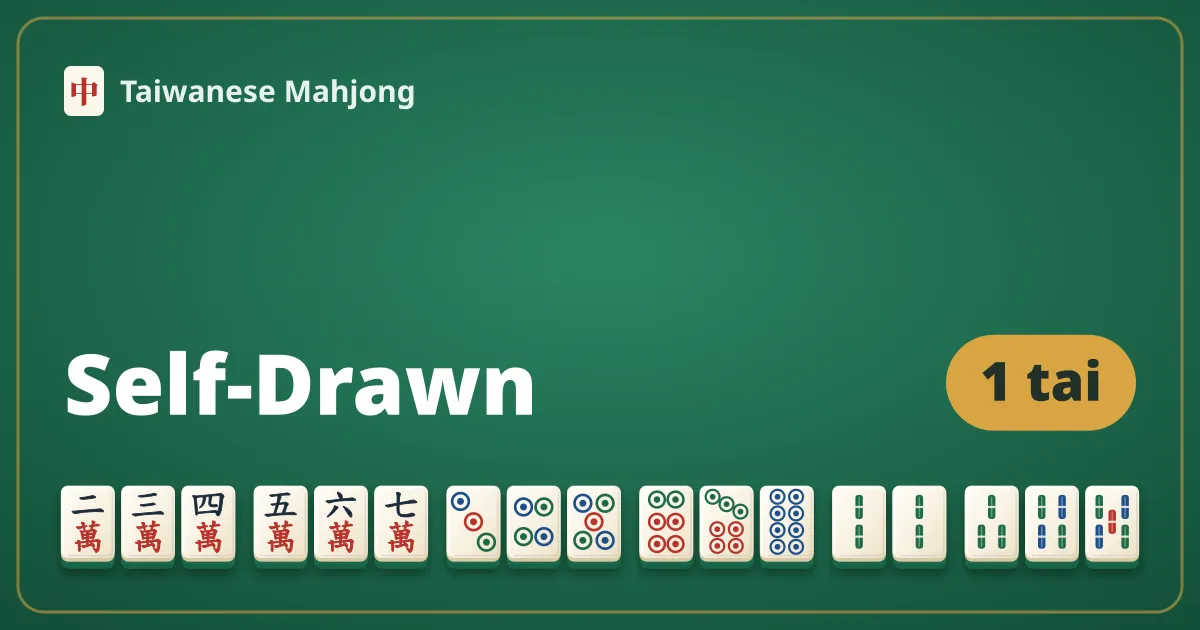 Self-Drawn 1 tai
Drawing your own winning tile — 1 tai, paid by all three opponents. Self-draw vs concealed self-draw, scoring combos and how often it happens.
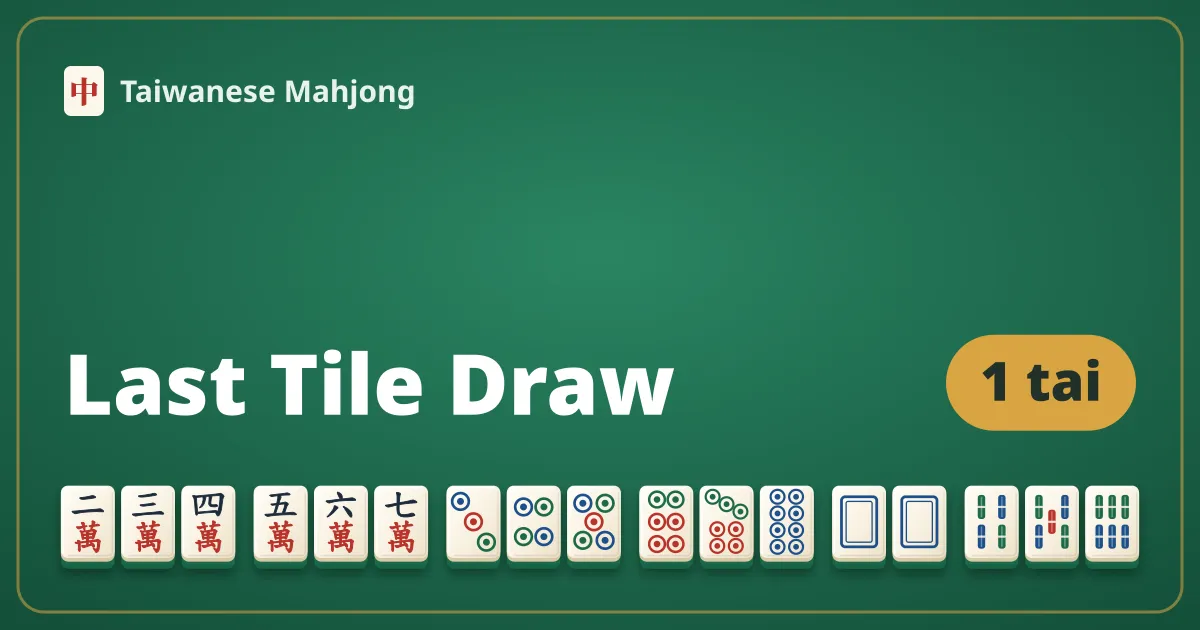 Last Tile Draw 1 tai
Self-draw the last tile of the wall for 1 extra tai: which tile is the last one, the difference from a last-discard win, and how rare it is.
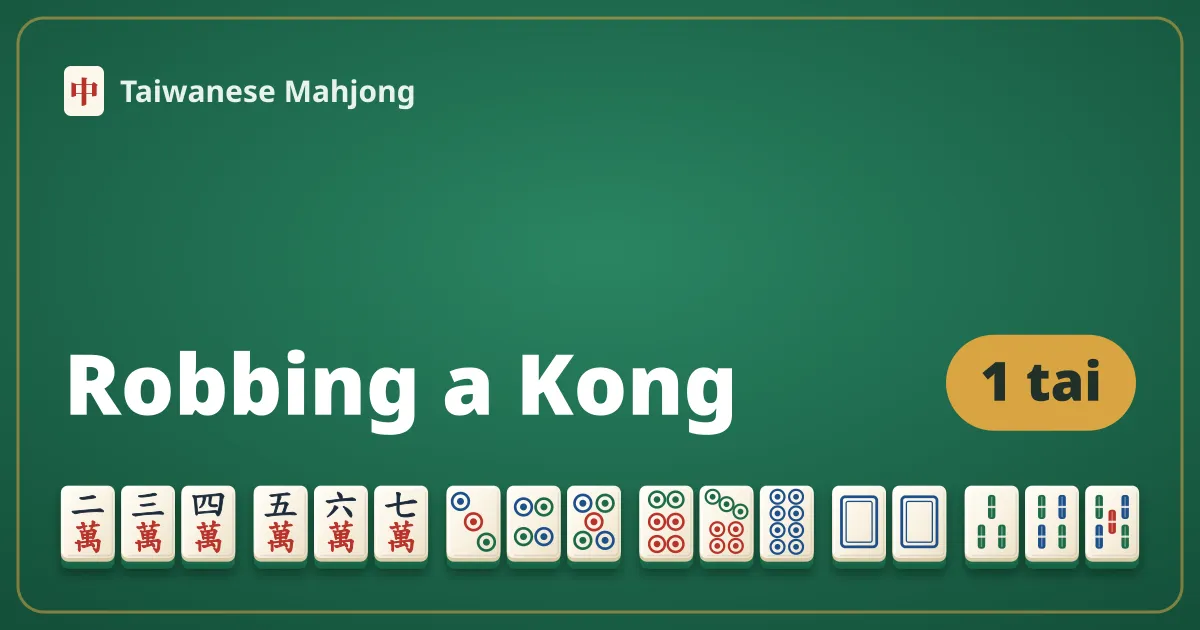 Robbing a Kong 1 tai
Win on the tile someone adds to their pung for 1 tai: which kongs can be robbed and who pays.
Try it at the table
Taiwanese Mahjong — Play authentic Taiwanese 16-tile mahjong free in your browser against three computer opponents. Flowers, chow, pung, kong, dealer streaks and automatic tai scoring. No sign-up, works on phone and desktop.