Taiwanese Mahjong · 1 tai
Last Tile Self-Draw (Hai Di Lao Yue) in Taiwanese Mahjong: Tai, Examples and Odds
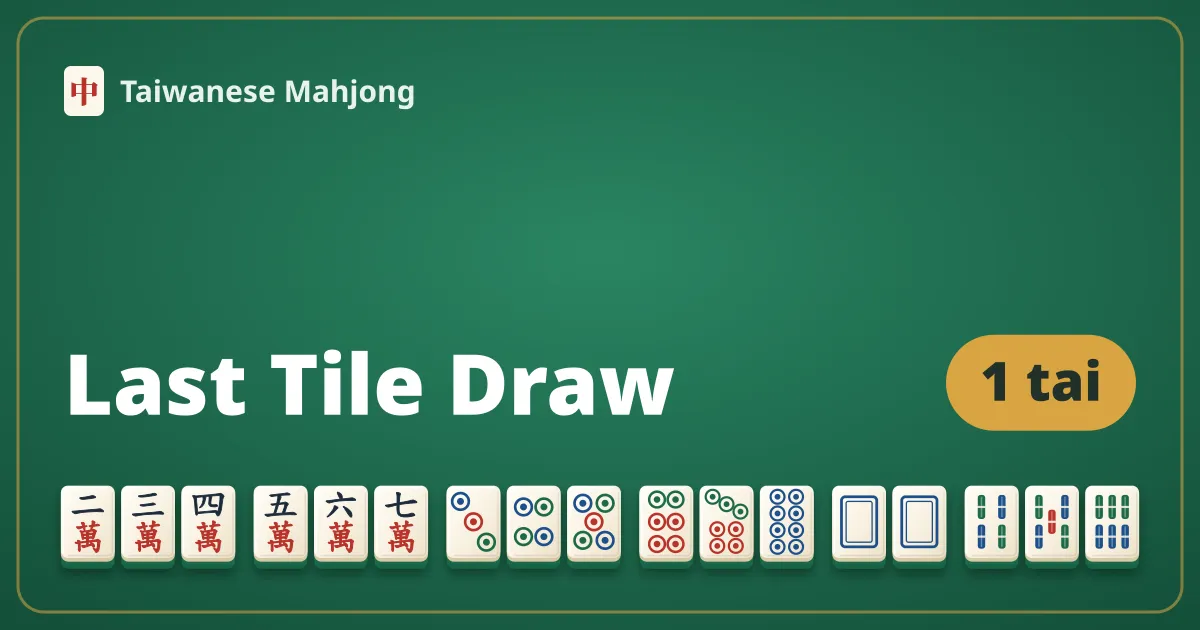
In Taiwanese mahjong, a last tile self-draw (海底撈月, hai di lao yue — "scooping the moon from the sea bed") is worth 1 tai: you draw the last tile that may be drawn from the wall and it completes your hand. The self-draw still counts, so it's at least self-drawn plus last tile, 2 tai; with a concealed hand it's concealed self-draw plus last tile, 4 tai.
On this page
The rules for Last Tile Draw
- The winning tile is the last tile that may be drawn from the wall, and you self-draw it
- Like most Taiwanese tables, this site holds back the last 16 tiles (8 stacks): the hand is a draw when 16 tiles remain, so the "last tile" is the one just before them
- If that last tile is discarded and someone wins on it, that's a different hand, Last Discard Win
- Claimed sets or a concealed hand are both fine — it only has to be a self-draw
How Last Tile Draw is scored
The tai below are computed live by the same scoring code the game uses (dealer and dealer-streak tai are added on top).
Self-drawn
| Self-drawn (自摸) | 1 |
| Last tile self-draw (海底撈月) | 1 |
| Total | 2 tai |
|---|
Dealer and dealer-streak tai are added on top.
Self-drawn
| Concealed self-draw (不求人) | 3 |
| Last tile self-draw (海底撈月) | 1 |
| Total | 4 tai |
|---|
Dealer and dealer-streak tai are added on top.
Common combinations:
| Combination | Tai |
|---|---|
| Self-drawn + last tile | 2 |
| Self-drawn + single wait + last tile | 3 |
| Concealed self-draw + last tile | 4 |
| Concealed self-draw + single wait + last tile | 5 |
How it relates to other hands
- Self-Drawn, Concealed Self-Draw: a last tile draw is always a self-draw, so the self-draw or concealed self-draw tai count as well.
- Last Discard Win: if the player who draws the last tile doesn't win and discards it, winning on that tile is a last discard win, also 1 tai. The two never happen together.
- Win on a Replacement Tile: if a replacement drawn from the back of the wall after a kong or flower happens to be the last drawable tile, both count.
- Ping hu: a last tile draw is a self-draw, so it never has ping hu.
Last Tile Draw odds
We let four computers play 12,000 hands on this site's table (normal level); 11,677 of them ended with a win:
- A last tile self-draw happened 21 times, 0.18% of all wins; a last discard win 41 times (0.35%).
- To scoop the moon, the hand has to last until the wall runs out with nobody winning, and then the last tile has to be yours — so it's rare.
- Wins with a last tile self-draw averaged 3.7 tai for the whole hand; all wins averaged 1.6 tai.
Playing the last few tiles
- Count who draws last: when the wall is low, count how many tiles are left and whose turn the last one falls on. If it's yours and you're ready, you have a shot at the moon.
- No claims on the last tile: once the wall is exhausted, the last discard can only be won — no chow, pung or kong — so don't count on a claim to get ready in the final round.
- Drew the last tile but didn't win: you still have to discard, and the wrong tile gives someone else a last discard win. If you aren't ready, a safe tile matters most.
To practise, open a table of online Taiwanese mahjong — the computers play with you and count the tai for you.
Last Tile Draw in other mahjong styles
- Japanese mahjong: "Haitei", 1 han, with an open or concealed hand (Japanese mahjong yaku list)
- Hong Kong mahjong: last tile self-draw is 1 fan (Hong Kong mahjong fan list)
- Chinese Official (Guobiao): self-drawing the last tile is "Last Tile Draw" (妙手回春), 8 fan; in Guobiao the name 海底撈月 means winning on the last discard instead (Guobiao fan list)
FAQ
How many tai is hai di lao yue?
In Taiwanese mahjong a last tile self-draw is worth 1 tai, plus 1 tai for the self-draw — at least 2 tai.
Which tile is the last tile?
The last tile that may be drawn before the held-back tiles. Like most Taiwanese tables this site holds back 8 stacks (16 tiles); the hand is a draw when 16 tiles remain.
What's the difference from a last discard win?
A last tile draw is self-drawing the last tile; a last discard win is someone else discarding that last tile and you winning on it.
Can the last tile be chowed or punged?
No. There's nothing left to draw afterwards, so the last discard can only be won — no chow, pung or kong.
Related hands
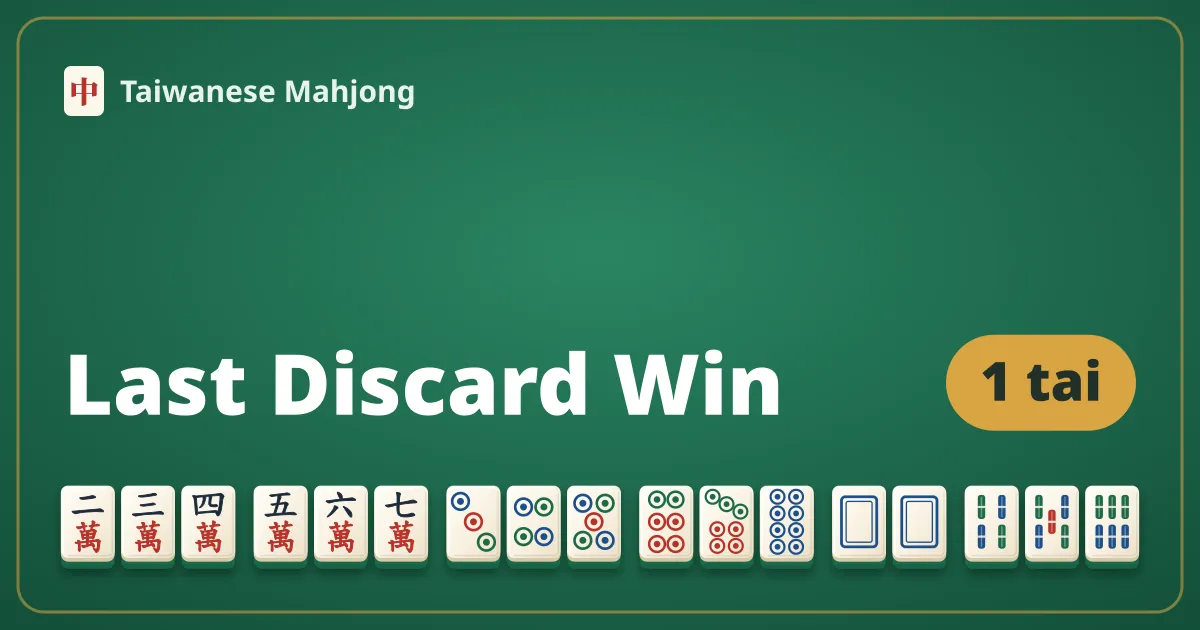 Last Discard Win 1 tai
Win on the very last discard of the hand for 1 tai: how it differs from Last Tile Self-Draw, and the rules for the last tile.
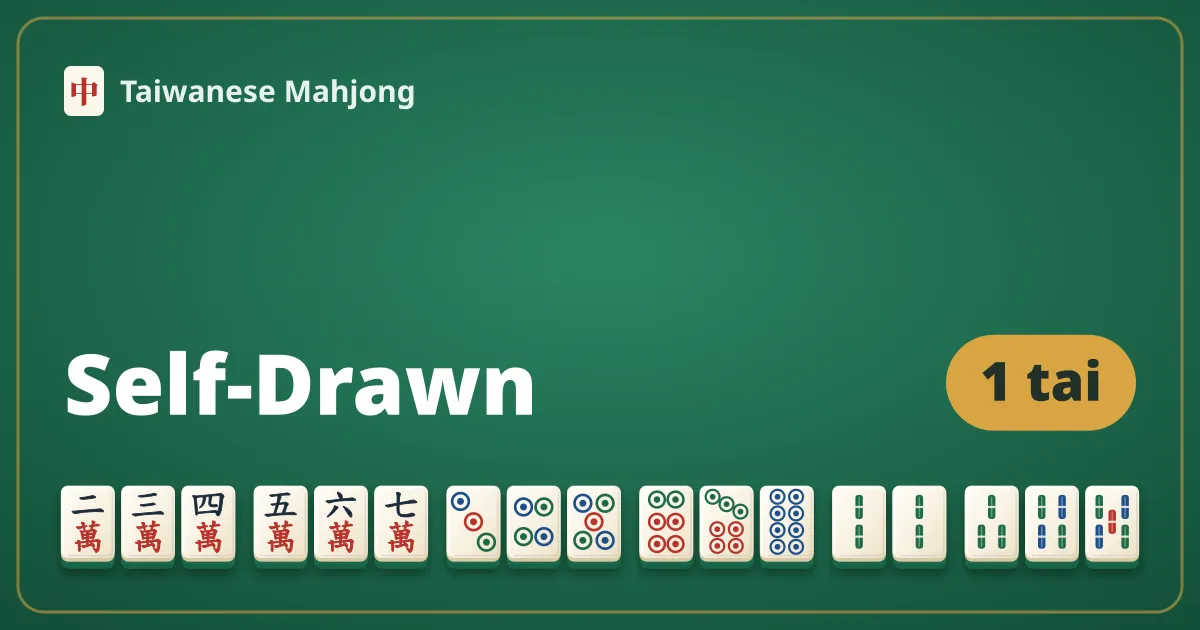 Self-Drawn 1 tai
Drawing your own winning tile — 1 tai, paid by all three opponents. Self-draw vs concealed self-draw, scoring combos and how often it happens.
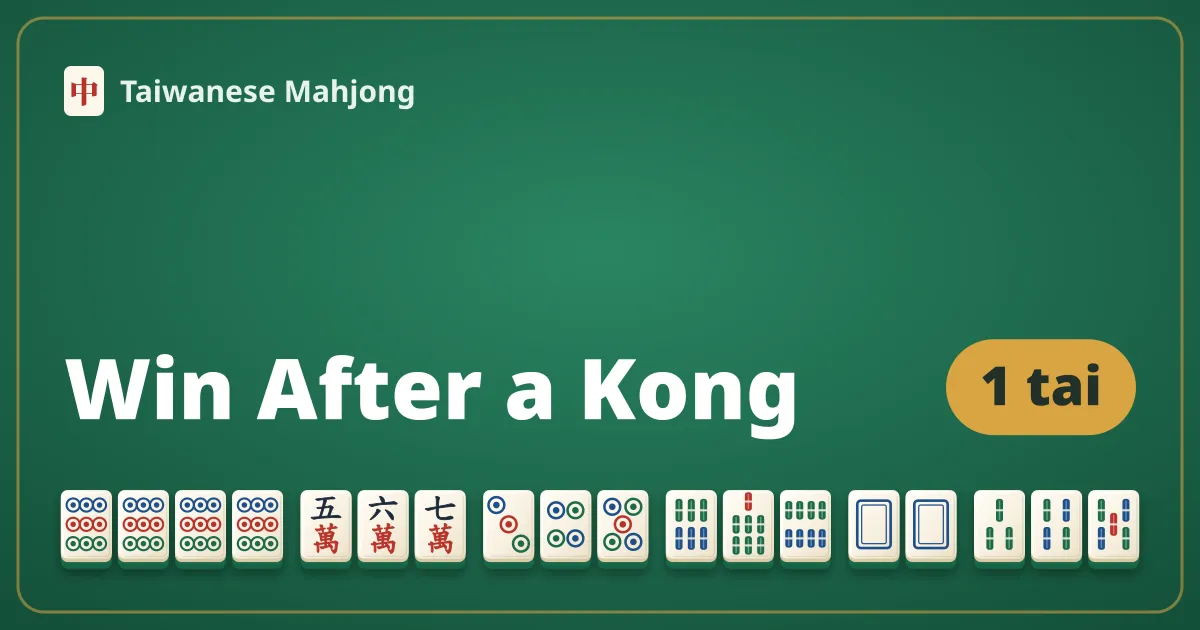 Win After a Kong 1 tai
Self-draw your win on the replacement tile after a kong or a flower for 1 tai: do flowers count, and how it stacks with self-draw.
Try it at the table
Taiwanese Mahjong — Play authentic Taiwanese 16-tile mahjong free in your browser against three computer opponents. Flowers, chow, pung, kong, dealer streaks and automatic tai scoring. No sign-up, works on phone and desktop.