Taiwanese Mahjong Scoring Table
Every hand our game scores, from 1 tai to 24 tai. Only the highest of a family counts. Tap a hand with a guide for examples, scoring and odds.
In-depth guides
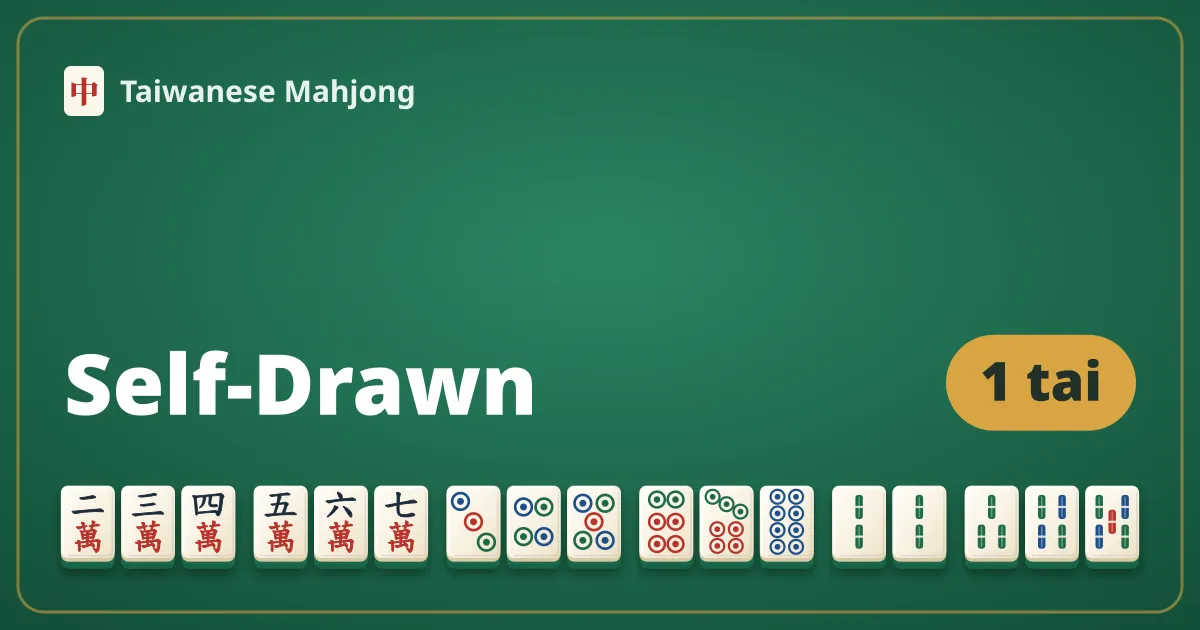 Self-Drawn 1 tai
Drawing your own winning tile — 1 tai, paid by all three opponents. Self-draw vs concealed self-draw, scoring combos and how often it happens.
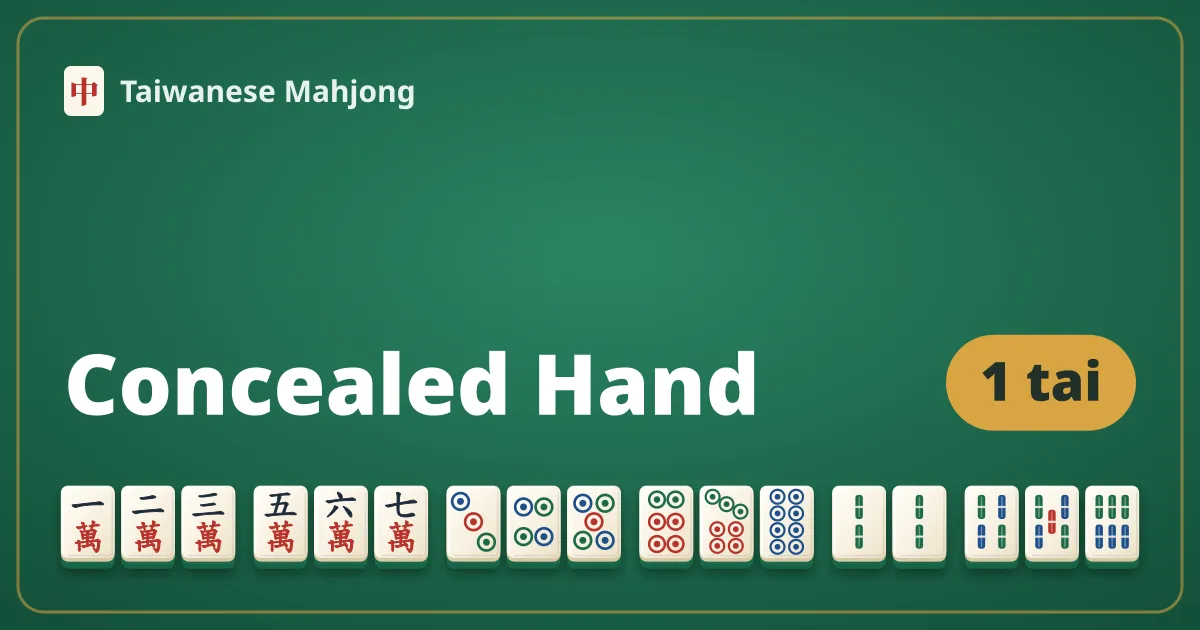 Concealed Hand 1 tai
No chows or pungs, won on a discard — 1 tai. Concealed kongs, the difference from concealed self-draw, and when staying concealed pays.
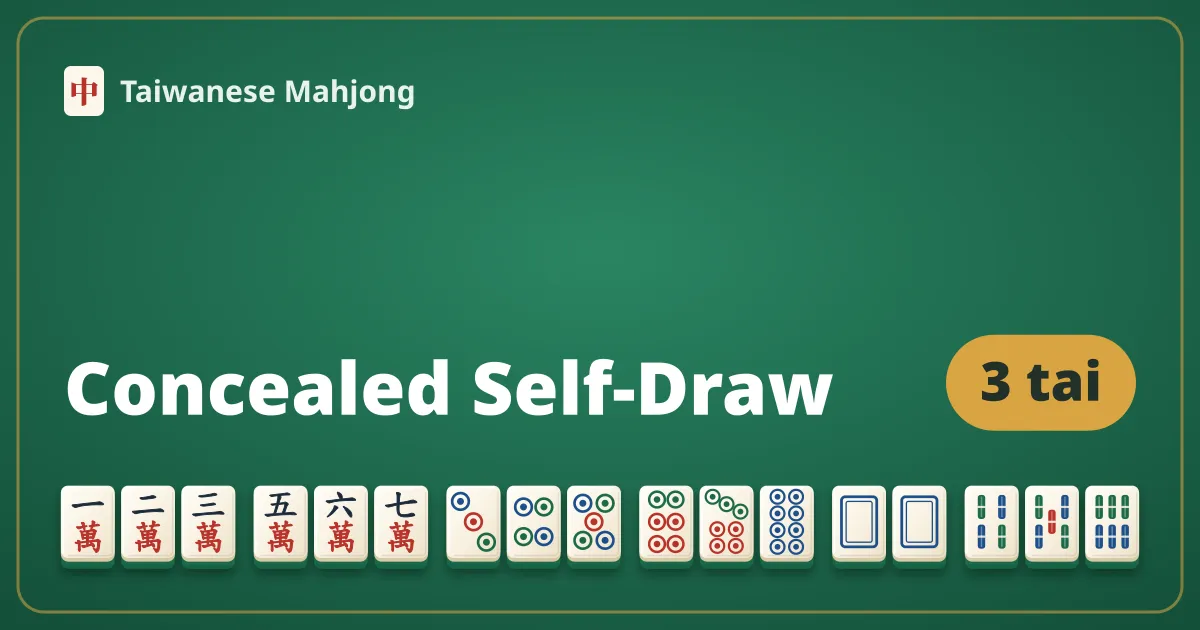 Concealed Self-Draw 3 tai
Never claim a tile and self-draw the win — 3 tai. Concealed hand vs self-draw, concealed kongs and replacement wins, and how often it happens.
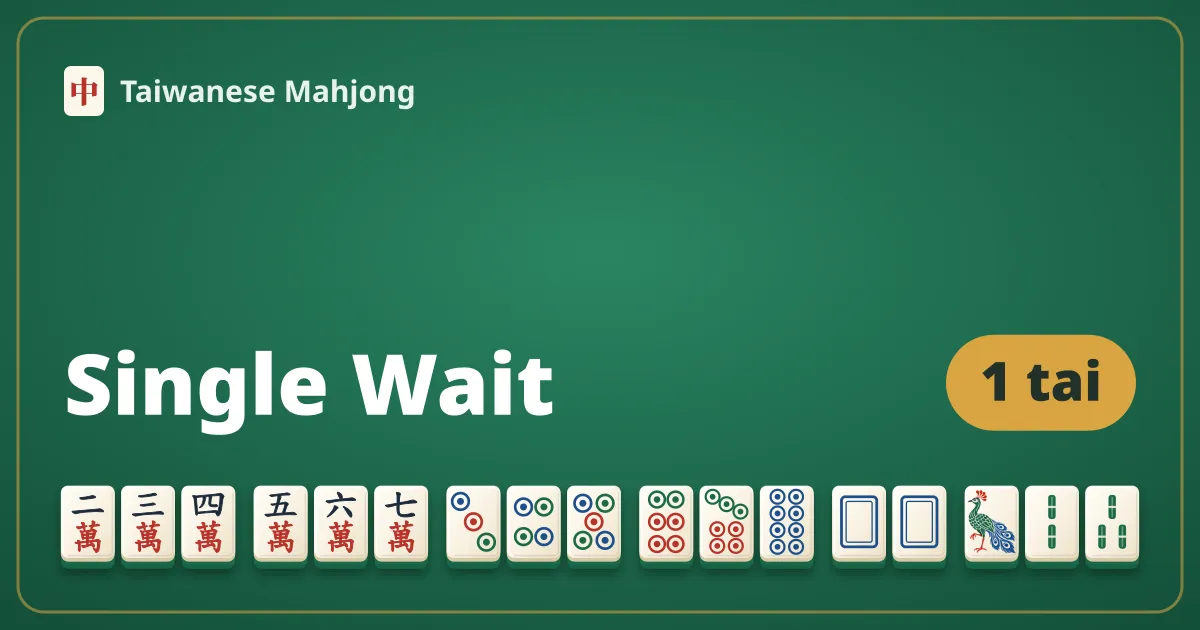 Single Wait 1 tai
Only one tile can win — 1 tai. Edge, closed and pair waits, false single waits, and how often it happens.
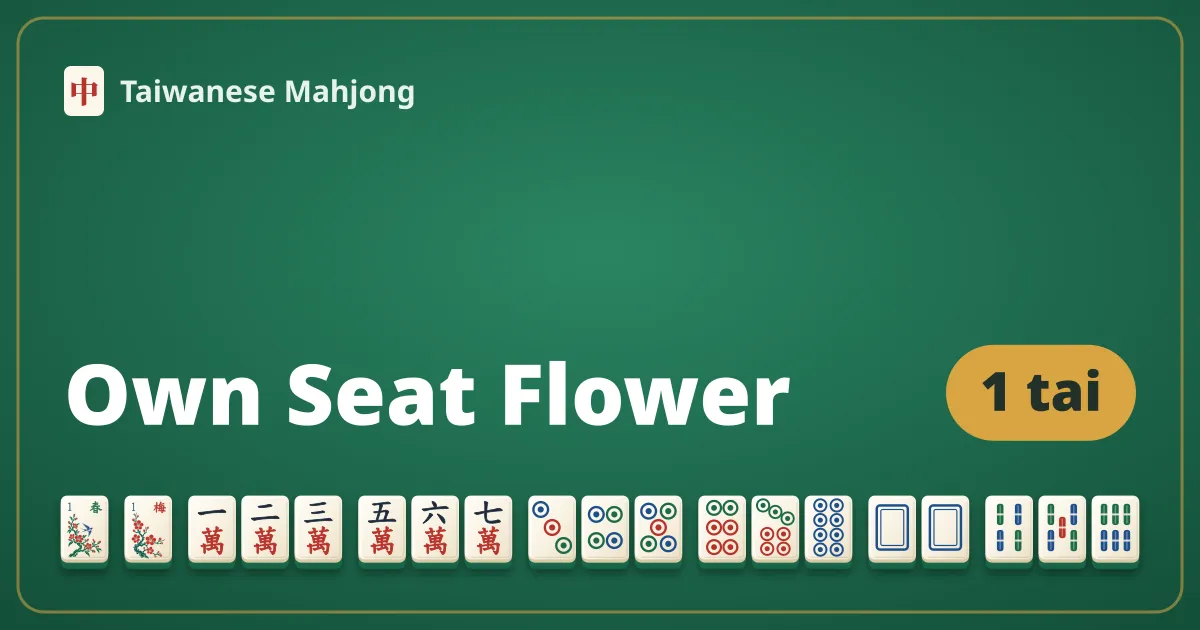 Own Seat Flower 1 tai
Each flower that matches your seat wind is 1 tai: a flower chart, and why any flower rules out Ping Hu.
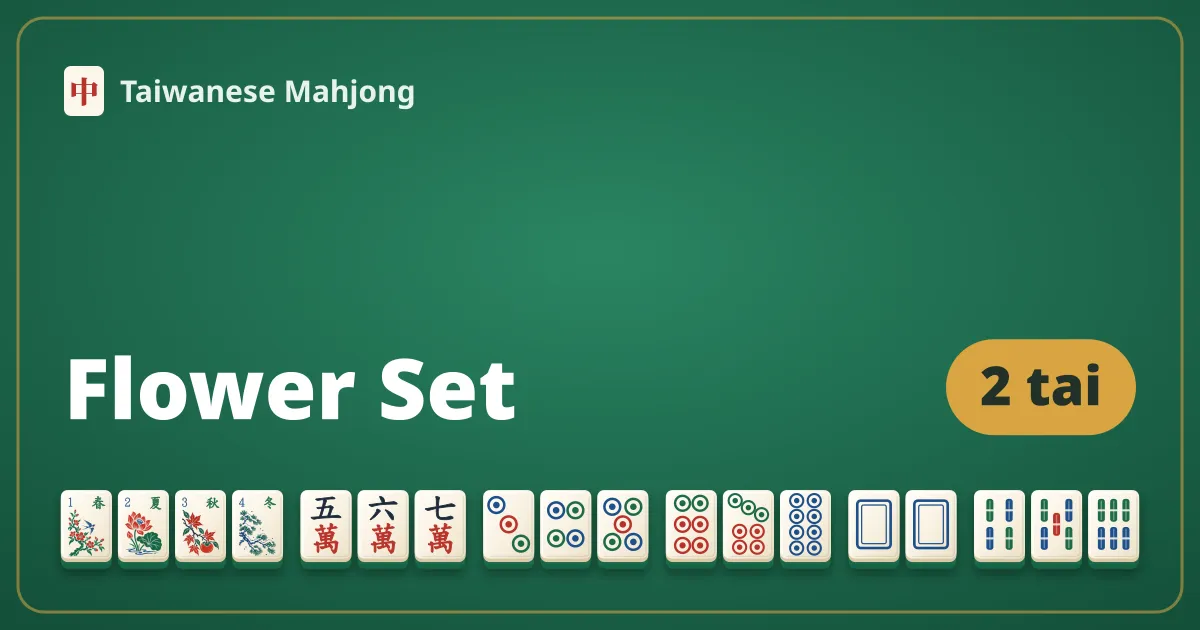 Flower Set 2 tai
All four seasons or all four plants for 2 tai: how it stacks with your own flower, and why there's at most one.
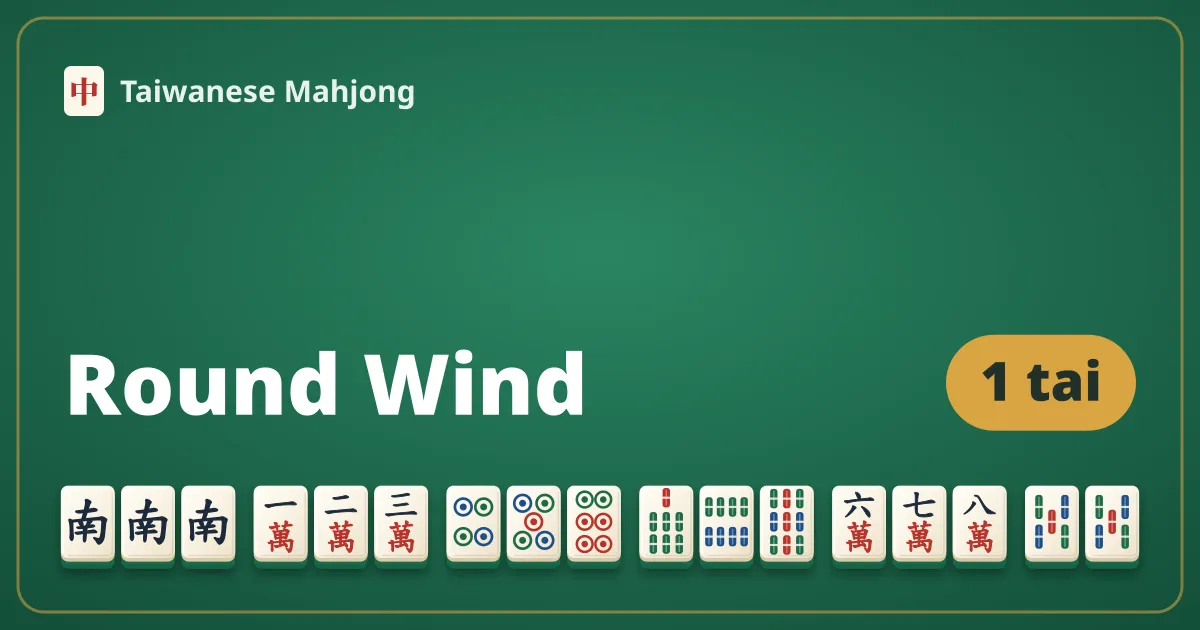 Round Wind 1 tai
A pung of this round's wind is 1 tai: how to tell the round wind, how it stacks with the seat wind, and why a pair scores nothing.
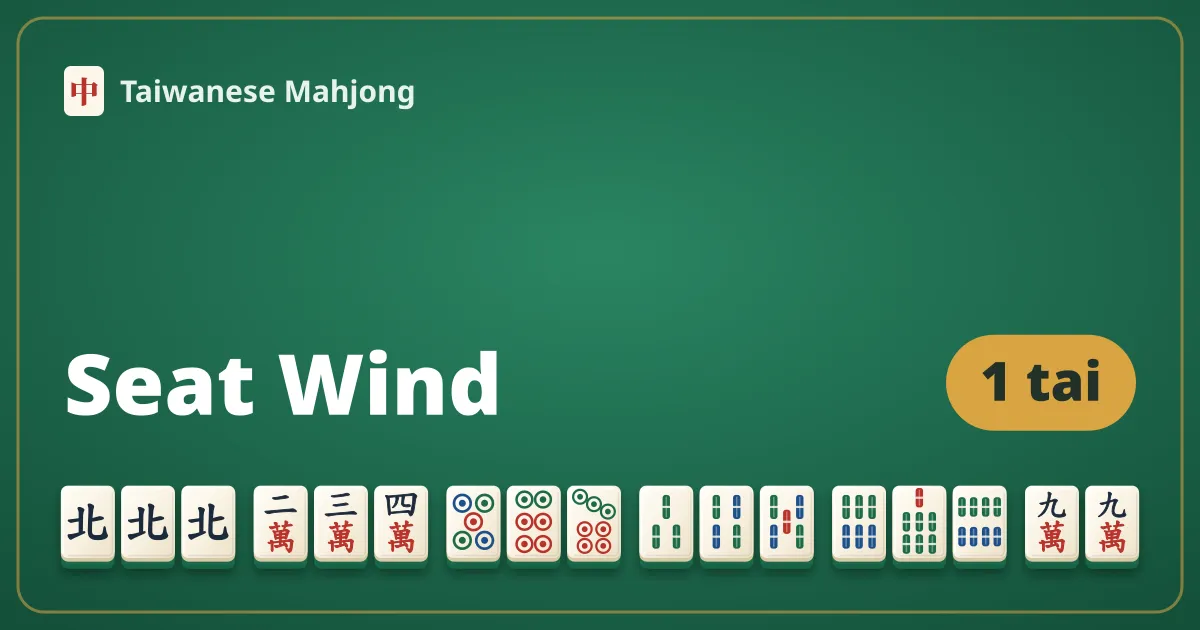 Seat Wind 1 tai
A pung of your own seat's wind is 1 tai: how to find your seat wind, how it changes with the deal, and how it stacks with the round wind.
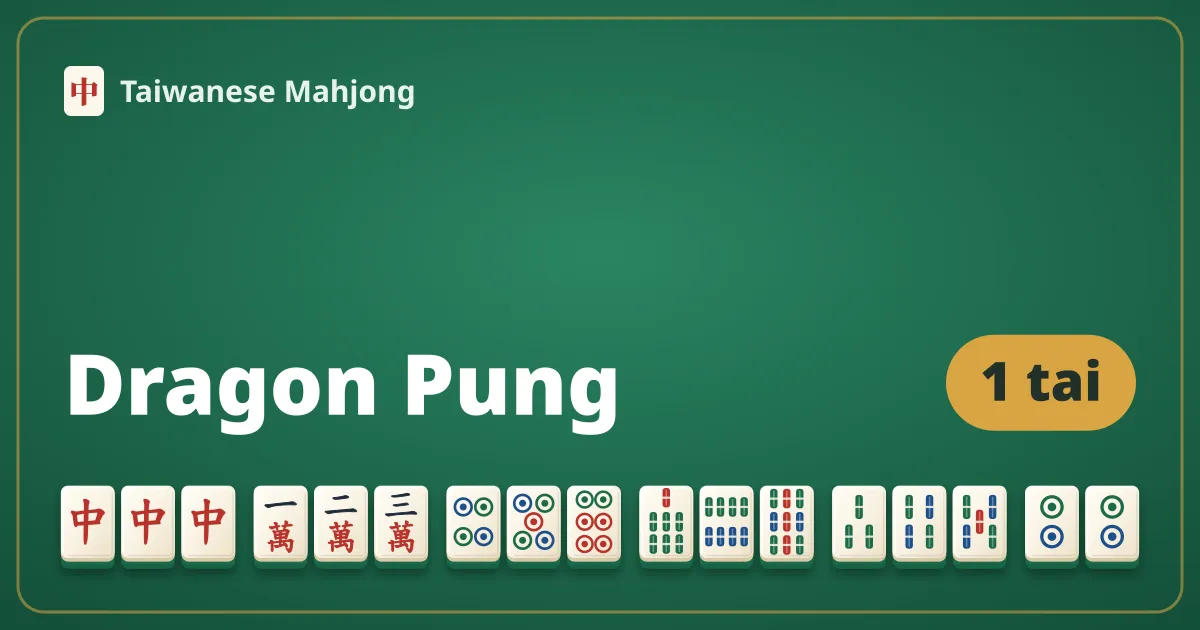 Dragon Pung 1 tai
Each pung of Red, Green or White is 1 tai: how it's counted, what two pungs score, and when it turns into Little or Big Three Dragons.
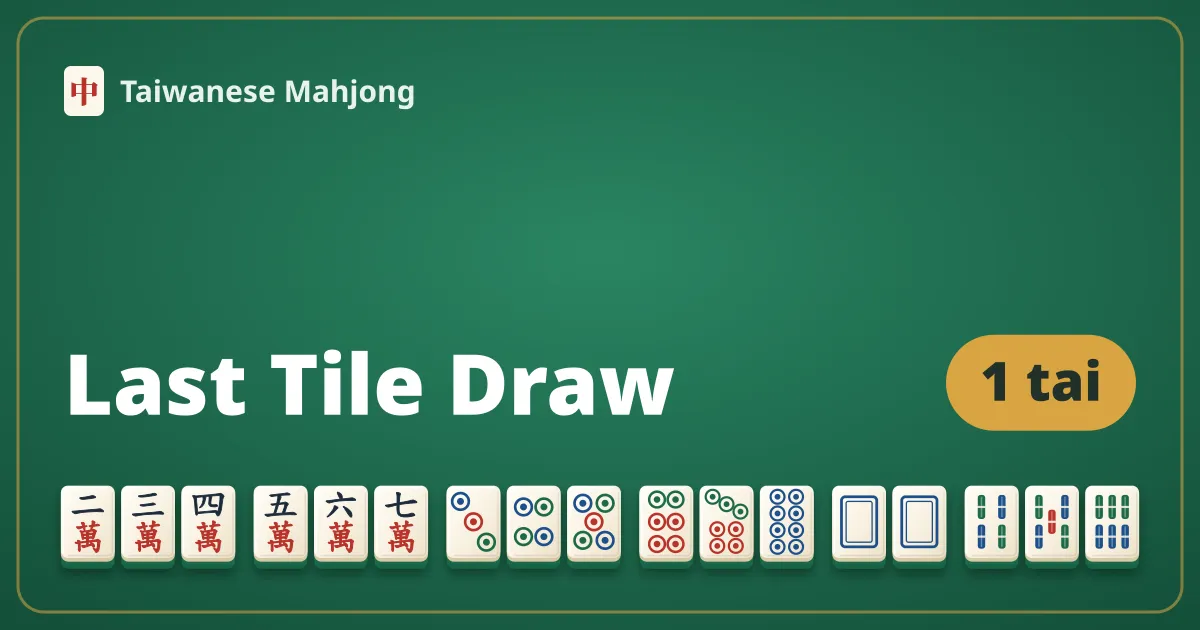 Last Tile Draw 1 tai
Self-draw the last tile of the wall for 1 extra tai: which tile is the last one, the difference from a last-discard win, and how rare it is.
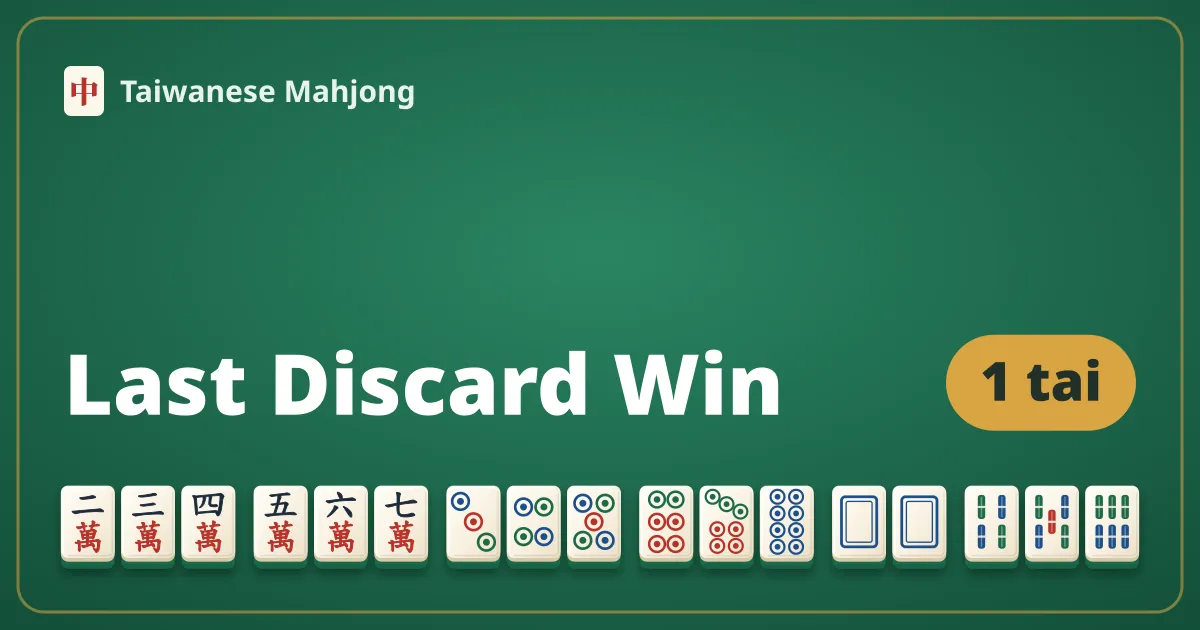 Last Discard Win 1 tai
Win on the very last discard of the hand for 1 tai: how it differs from Last Tile Self-Draw, and the rules for the last tile.
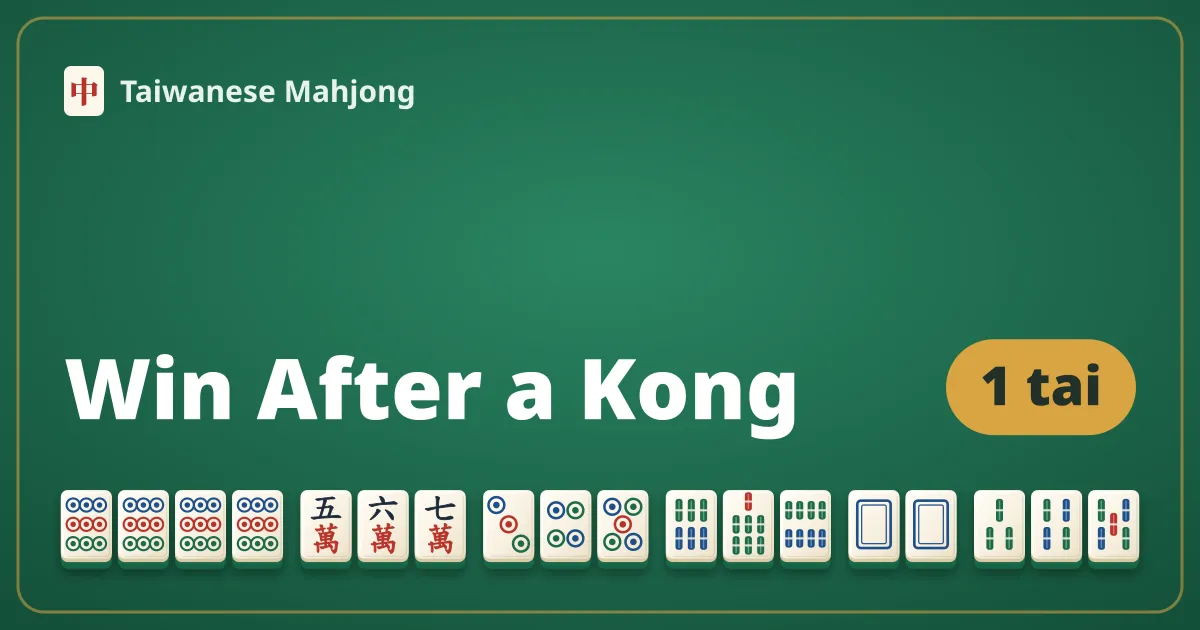 Win After a Kong 1 tai
Self-draw your win on the replacement tile after a kong or a flower for 1 tai: do flowers count, and how it stacks with self-draw.
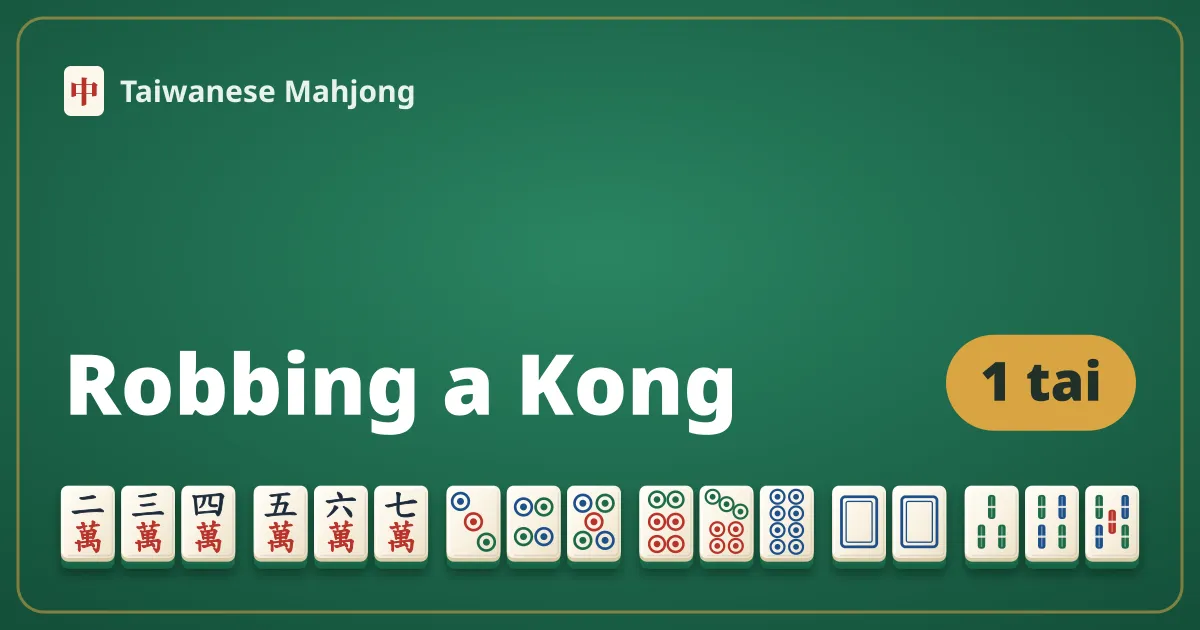 Robbing a Kong 1 tai
Win on the tile someone adds to their pung for 1 tai: which kongs can be robbed and who pays.
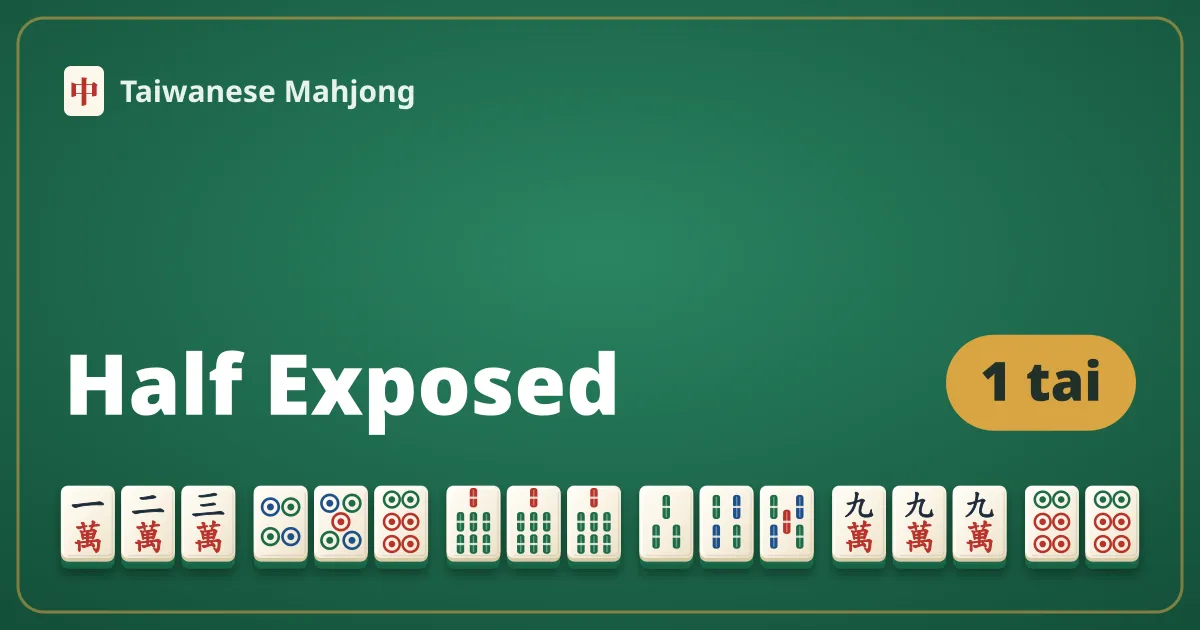 Half Exposed 1 tai
All five sets claimed and a self-drawn pair wait: 1 tai plus 1 for the self-draw. The difference from All Exposed and common mistakes.
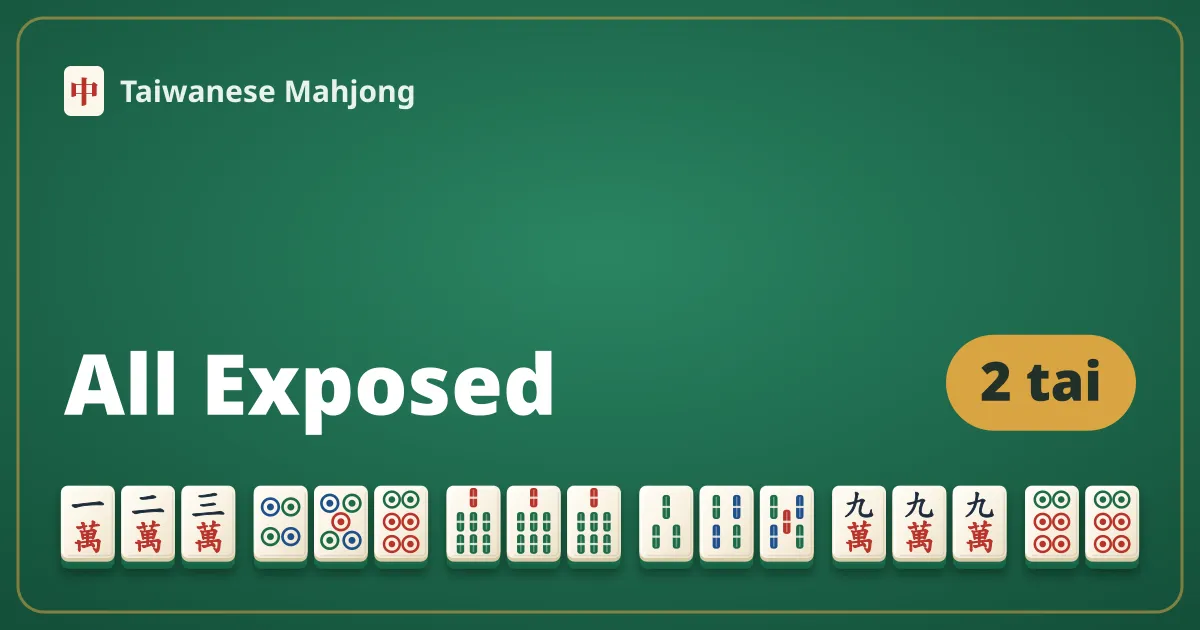 All Exposed 2 tai
All five sets claimed and a pair wait won on a discard: 2 tai. Half exposed vs all exposed, combos, and why it's rarely worth chasing.
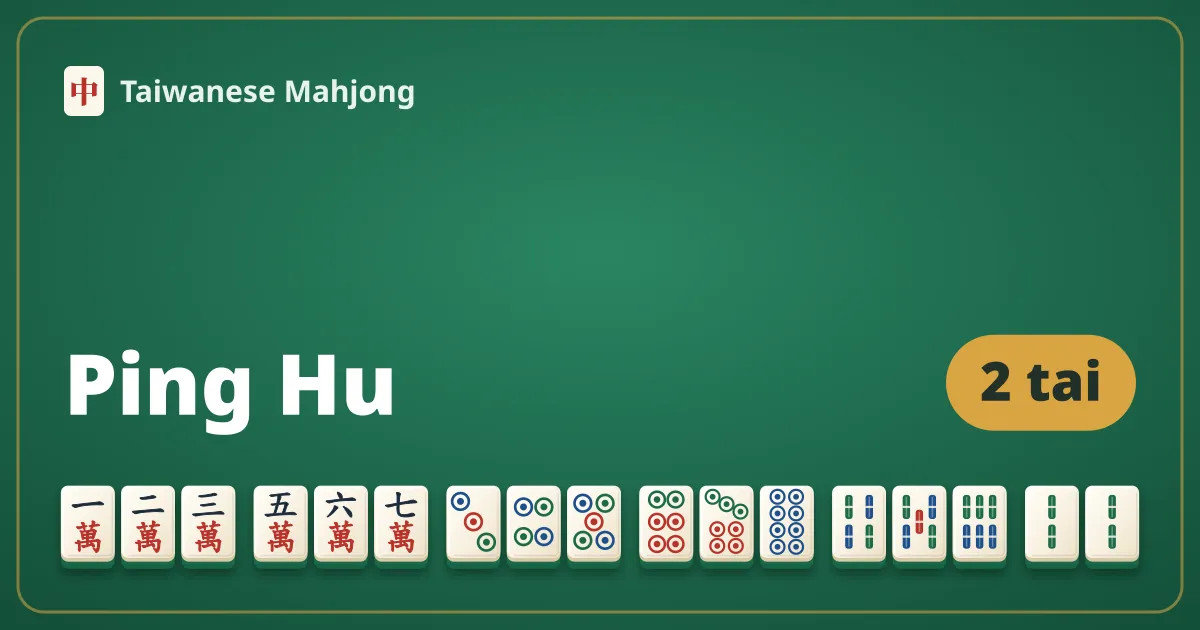 Ping Hu 2 tai
Five chows, no honors, no flowers, two-sided wait, no self-draw — a 2-tai hand. Checklist, common mistakes and odds.
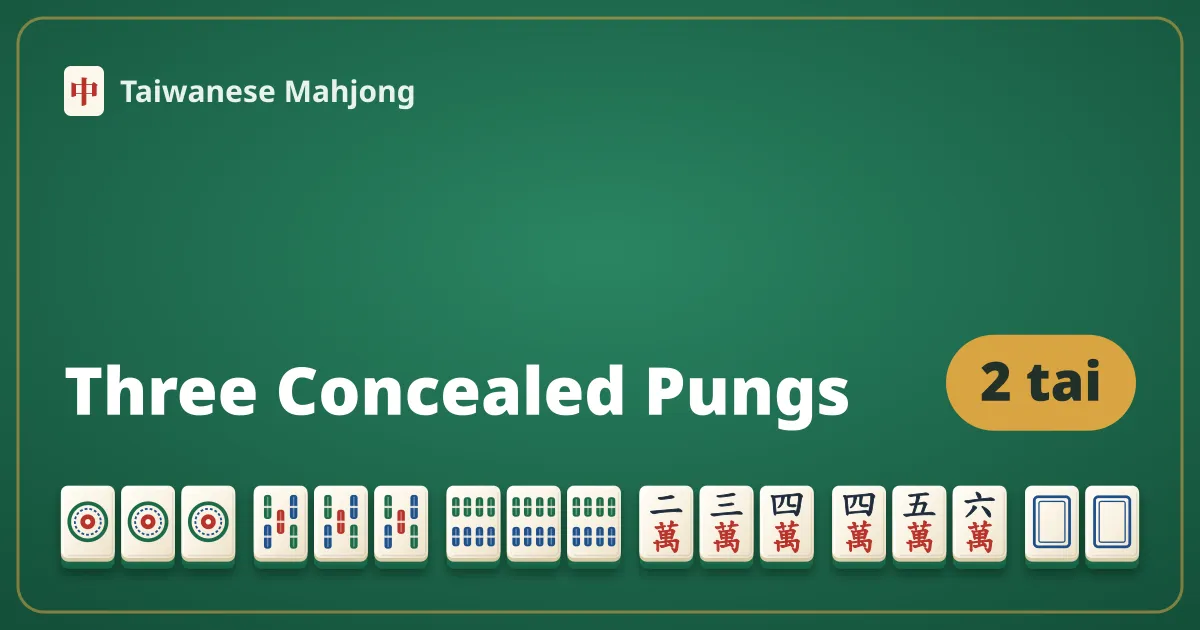 Three Concealed Pungs 2 tai
Three self-drawn pungs for 2 tai: which pungs count as concealed, when a discard costs you one, and how to upgrade to four.
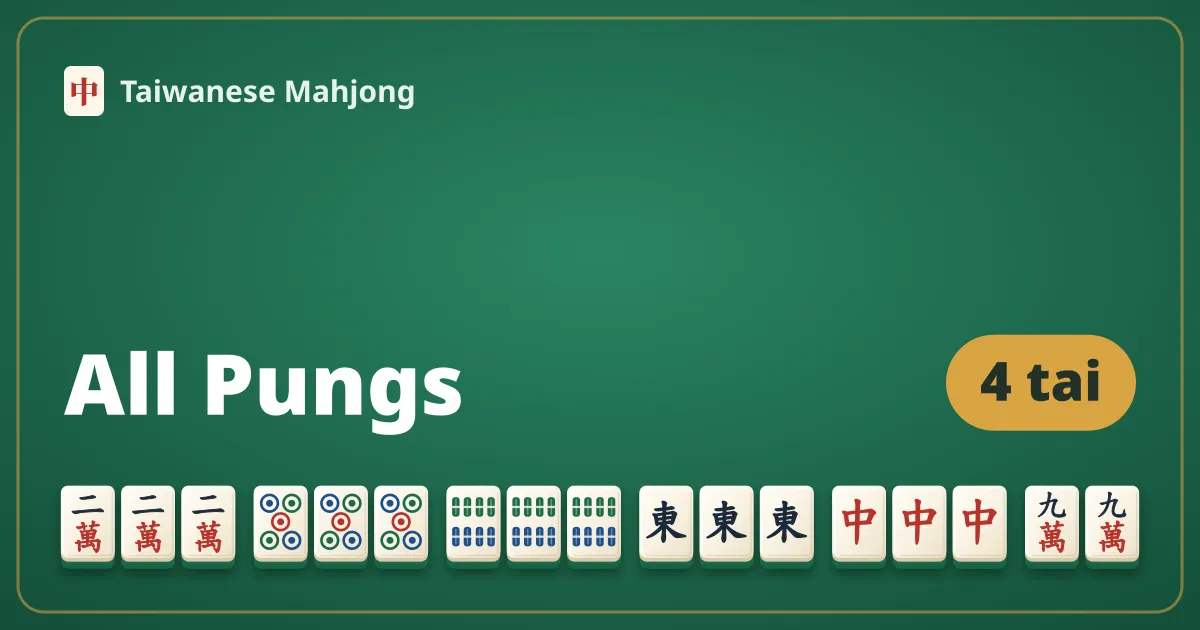 All Pungs 4 tai
Five pungs and a pair, no chows allowed — 4 tai. Examples, scoring combos and how many pairs you need to go for it.
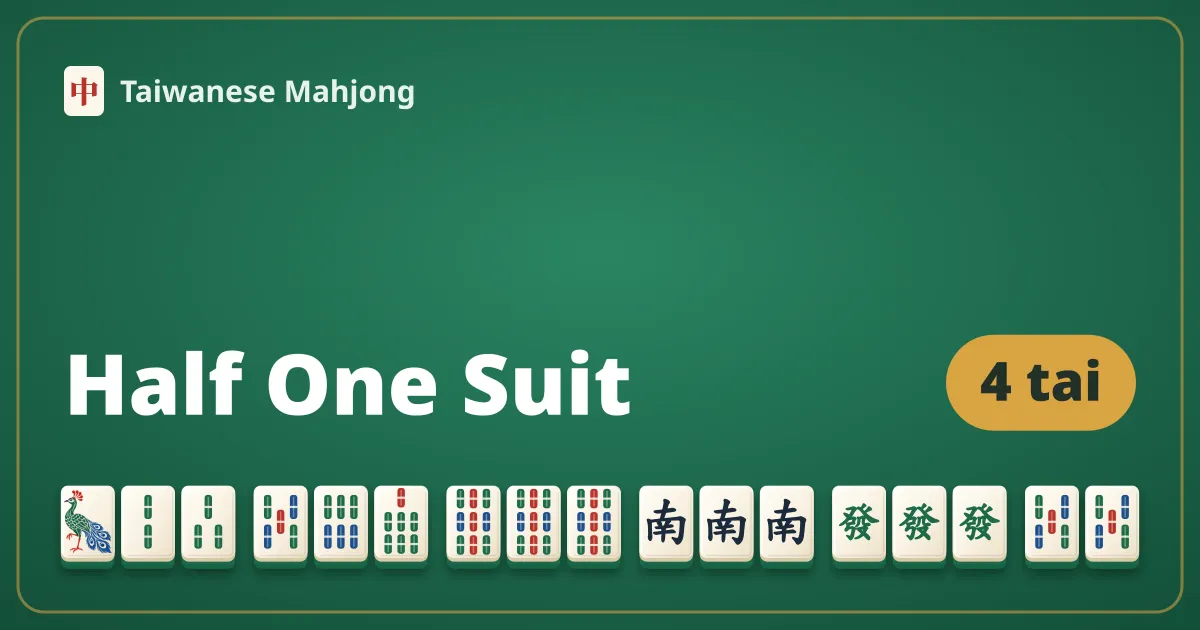 Half One Suit 4 tai
One suit plus honors — a 4-tai hand. Examples, Half One Suit vs Pure One Suit, and how concentrated your start must be.
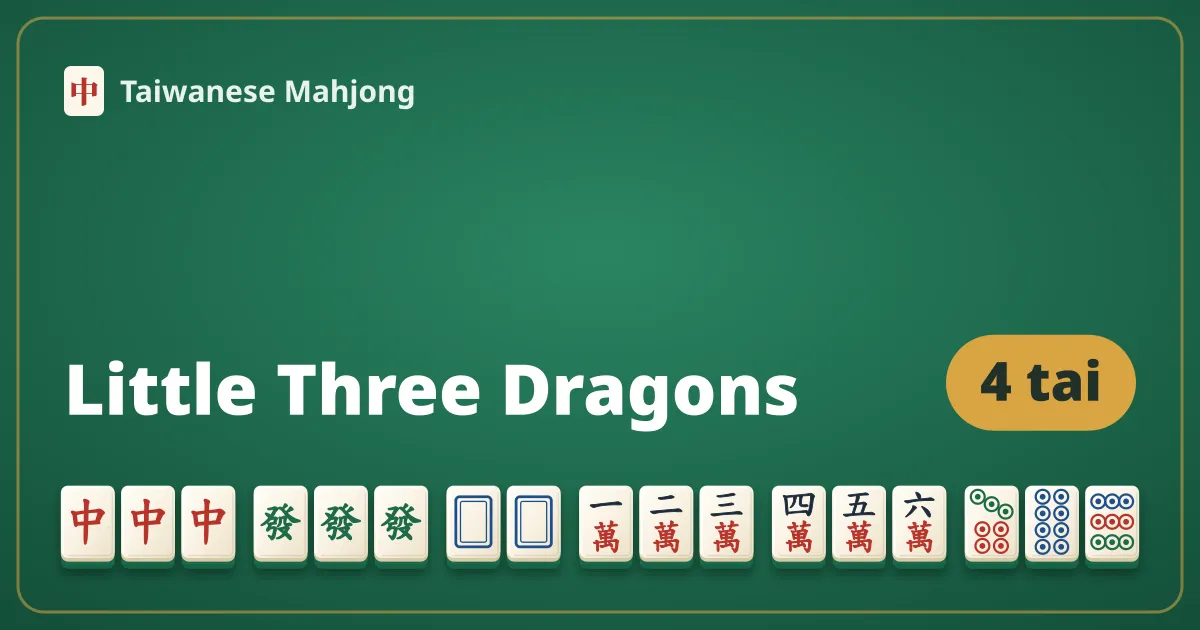 Little Three Dragons 4 tai
Two dragon pungs with the third dragon as the pair — 4 tai. Examples, the two-pair wait, and how it differs from Big Three Dragons.
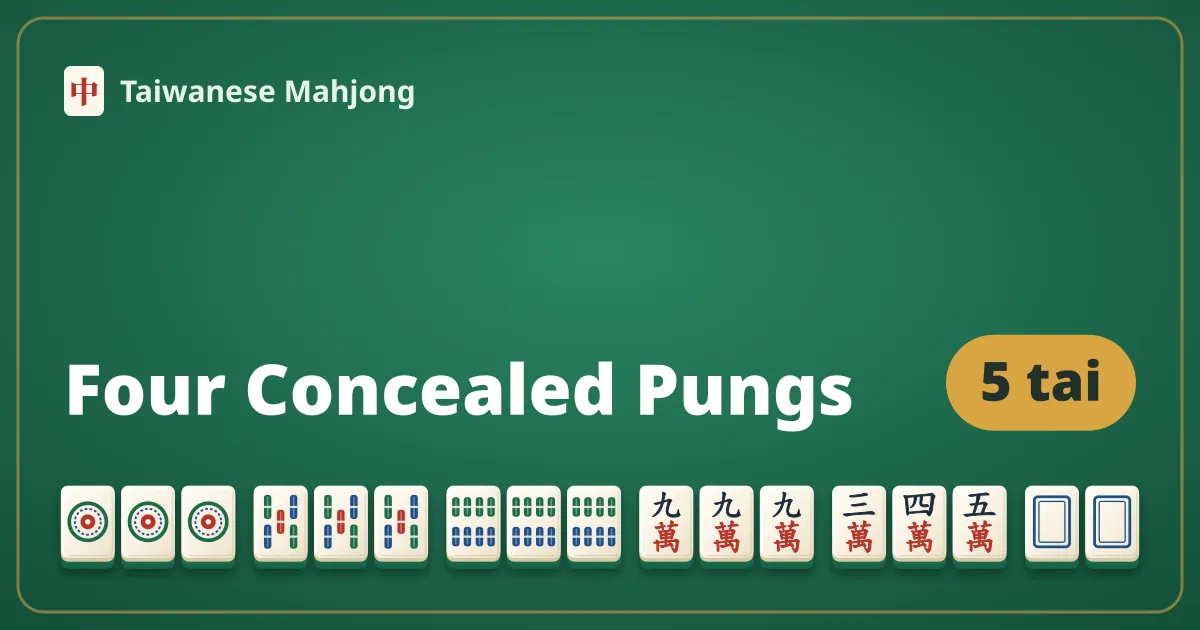 Four Concealed Pungs 5 tai
Four self-drawn pungs for 5 tai: a pung completed on a discard doesn't count, and one more makes five.
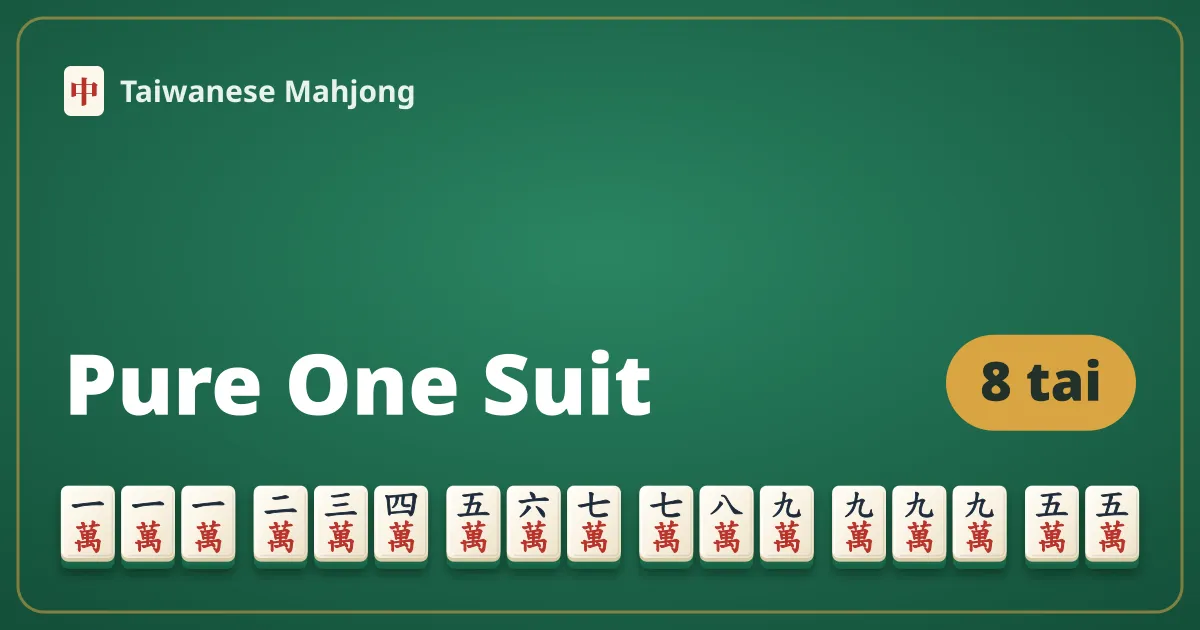 Pure One Suit 8 tai
Every tile from a single suit — an 8-tai big hand. Examples, Half One Suit vs Pure One Suit, and how many suited tiles you need to go for it.
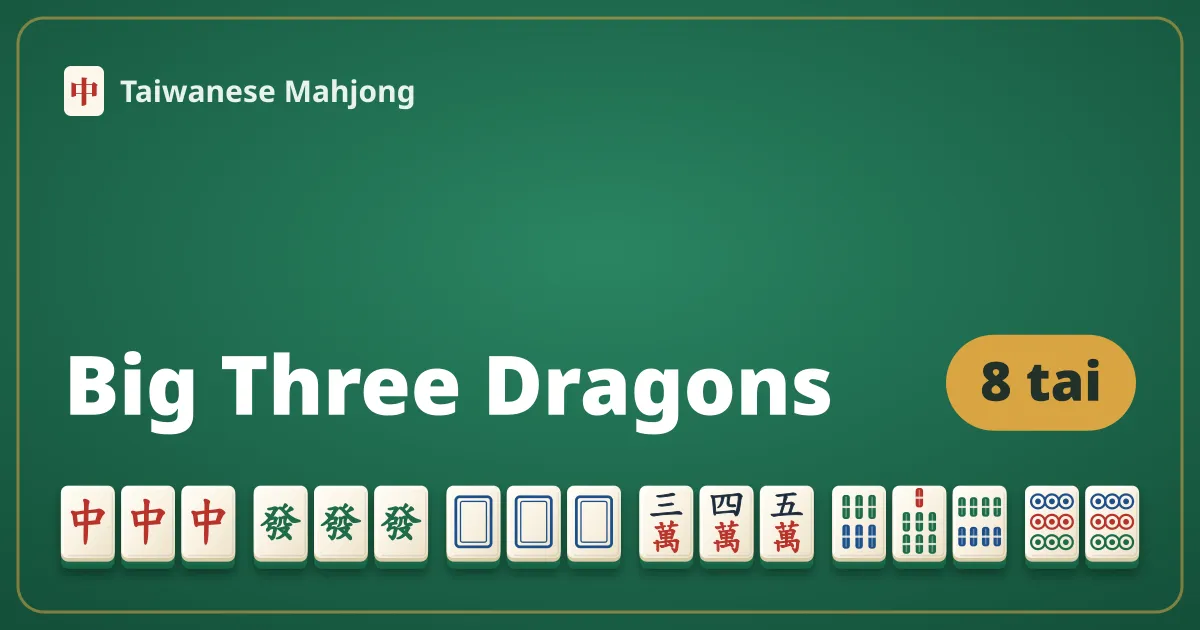 Big Three Dragons 8 tai
Pungs of all three dragons — an 8-tai big hand. Examples, scoring combos, and what your opening hand needs.
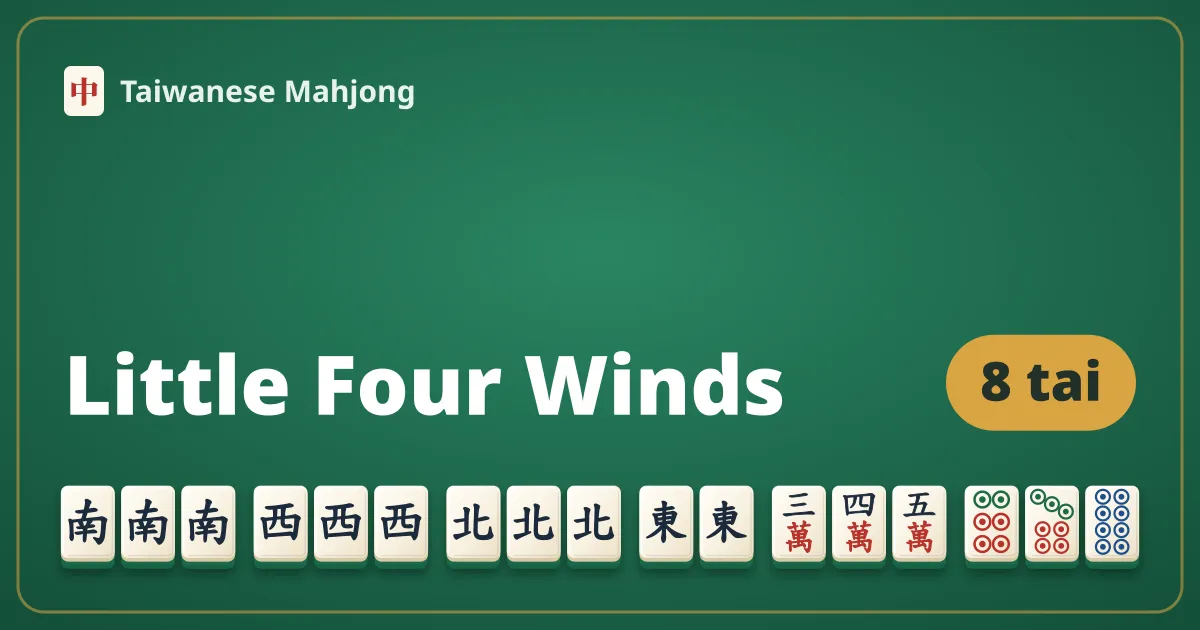 Little Four Winds 8 tai
Three wind pungs with the fourth wind as the pair — an 8-tai big hand. Examples, how round and seat wind count, and how it differs from Big Four Winds.
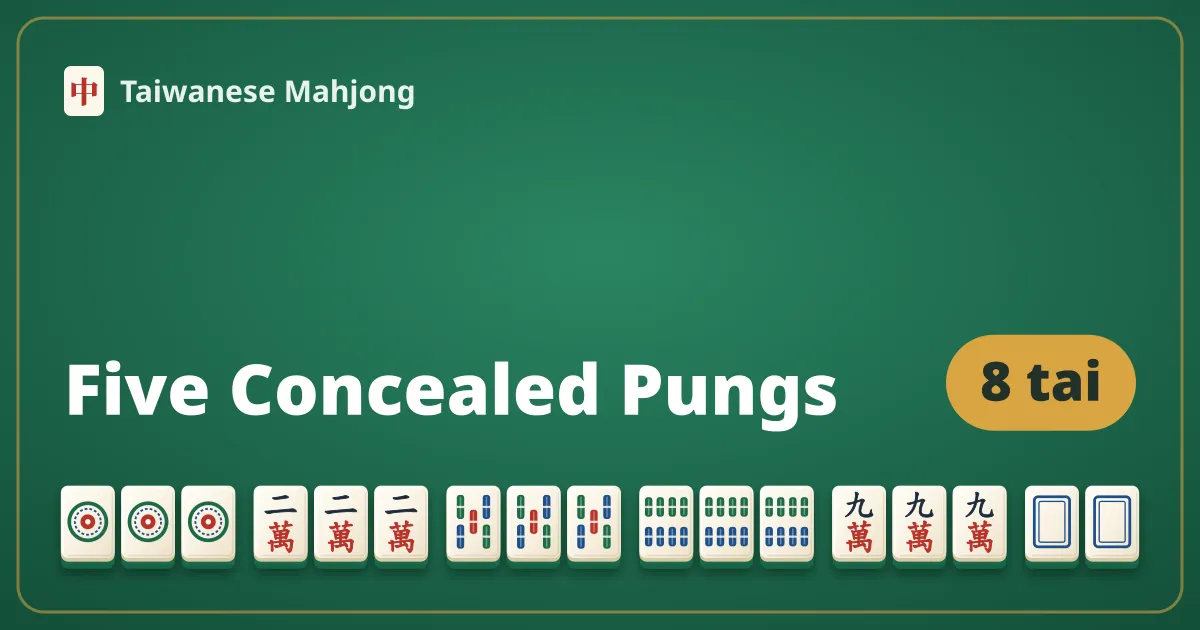 Five Concealed Pungs 8 tai
All five pungs self-drawn, an 8-tai big hand: always All Pungs too, and a single wait on a discard still counts.
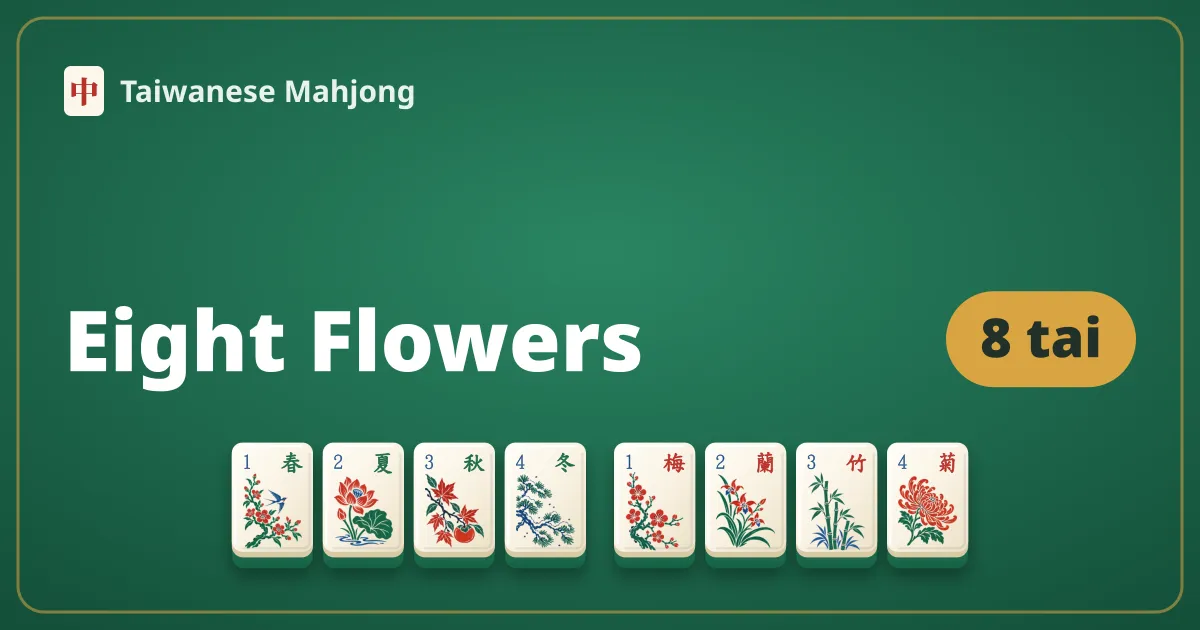 Eight Flowers 8 tai
All eight flowers in your hand win on the spot for 8 tai: flower tai on top, who pays, and just how rare it is.
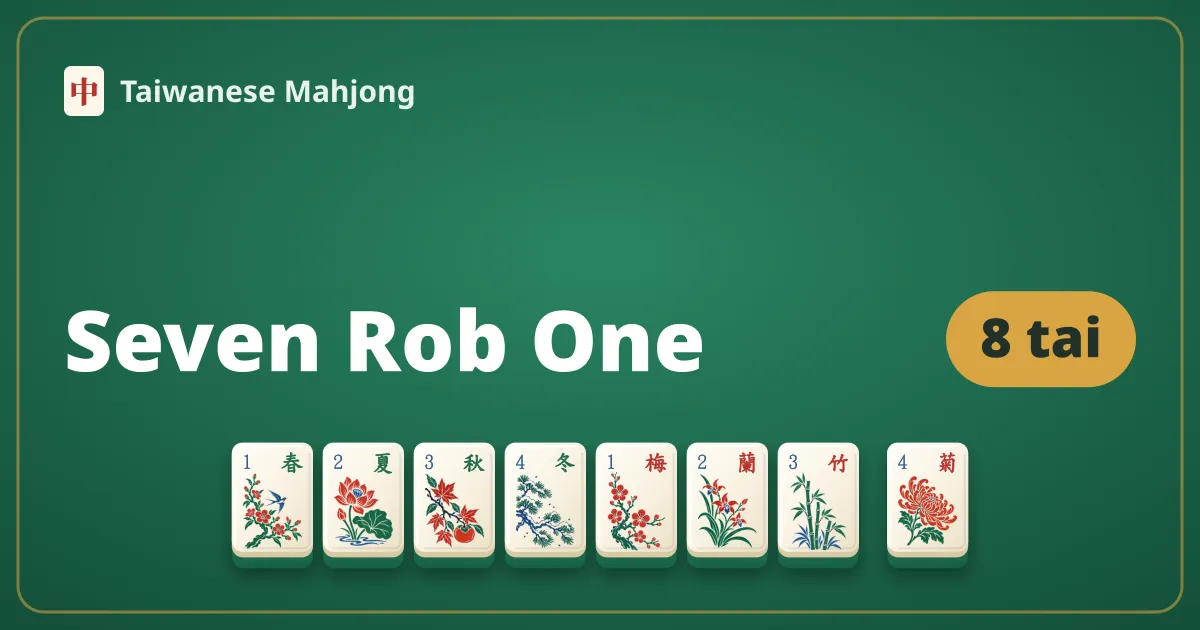 Seven Rob One 8 tai
Hold seven flowers and rob the eighth when someone draws it, for 8 tai: who pays and how it differs from Eight Flowers.
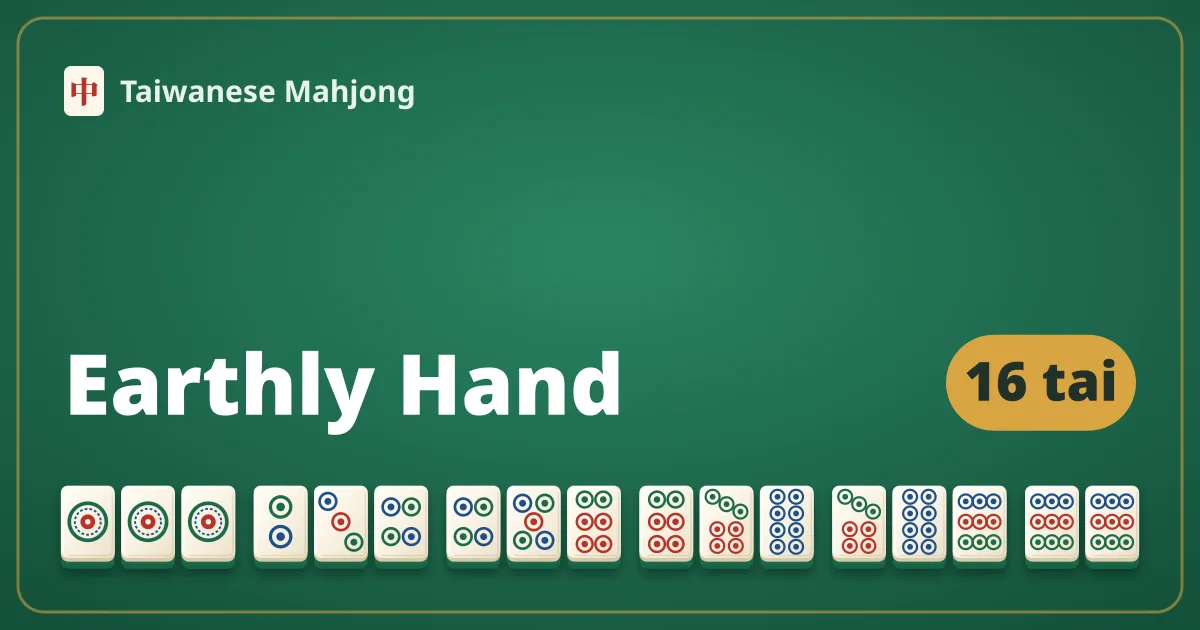 Earthly Hand 16 tai
A non-dealer self-draws on their first draw, 16 tai: any chow, pung or kong in the first round cancels it, and the odds are close to a Heavenly Hand's.
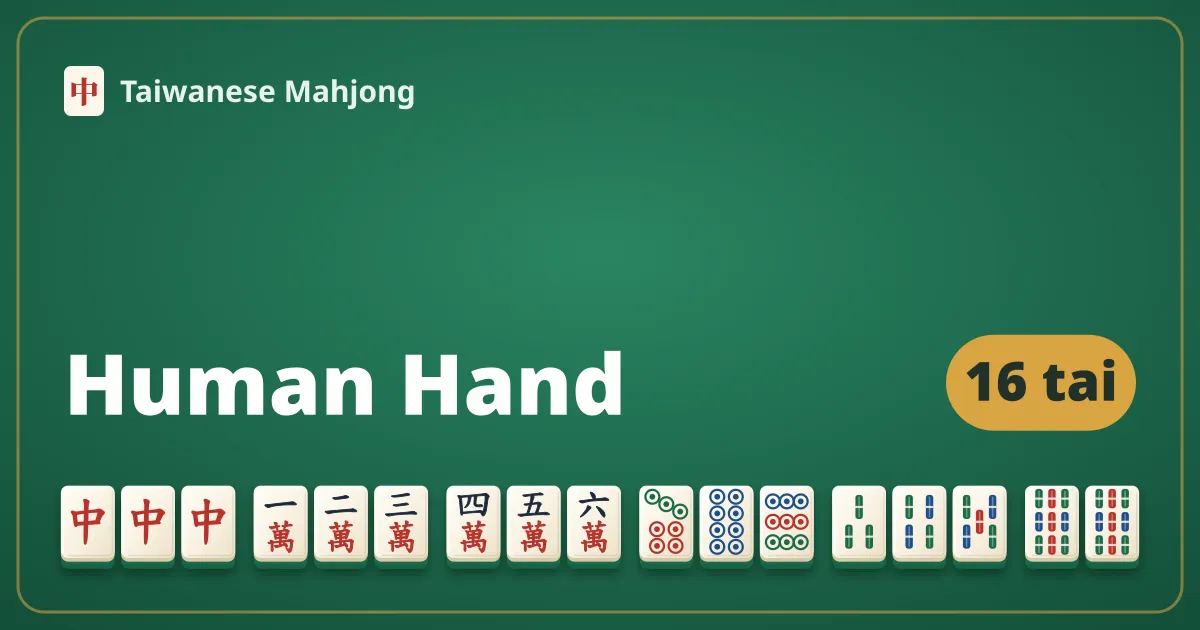 Human Hand 16 tai
A non-dealer wins on the dealer's first discard, 16 tai: you must be ready on the deal, and only the dealer pays.
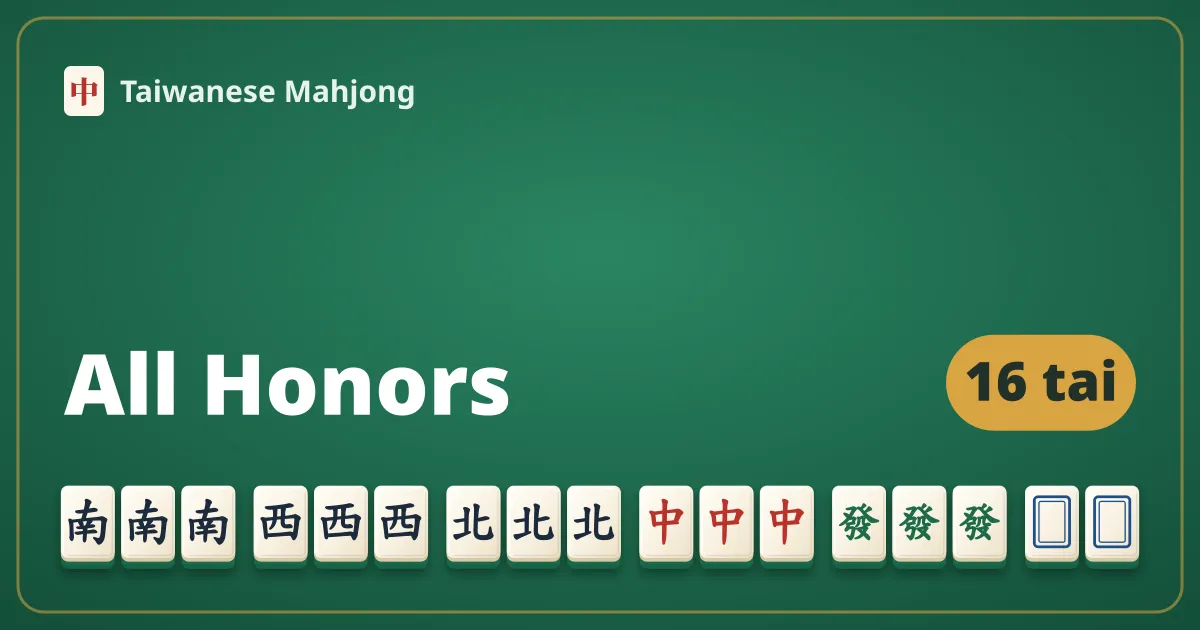 All Honors 16 tai
A hand made only of honor tiles, 16 tai: it always brings dragons or four winds along, so it starts at 20 tai.
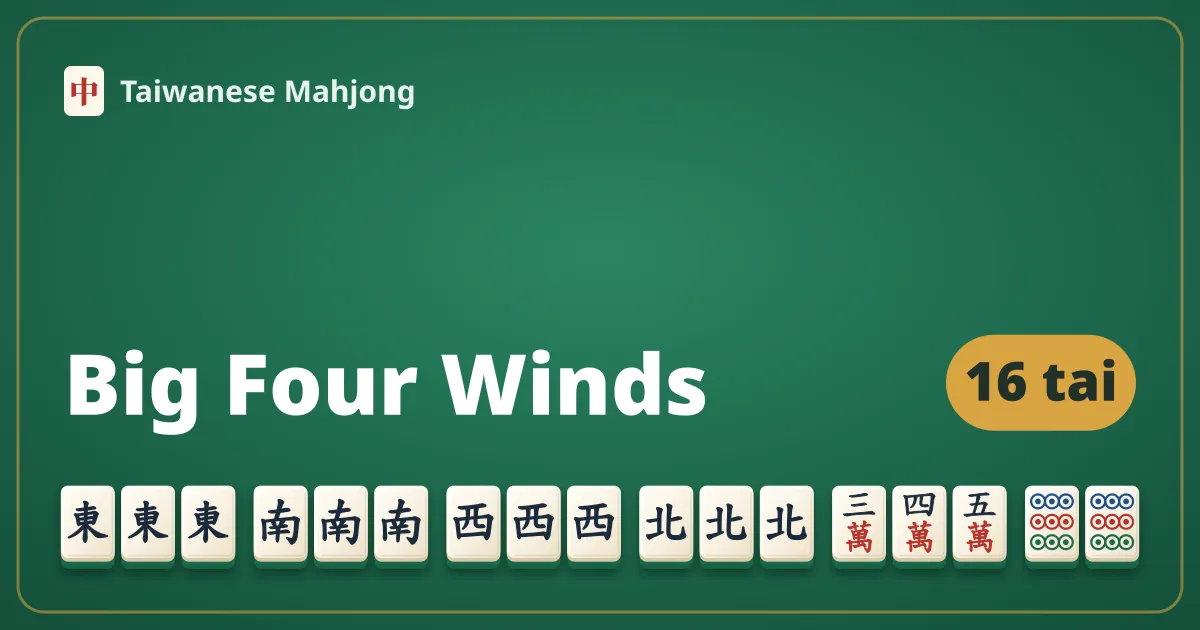 Big Four Winds 16 tai
Pungs of all four winds — a 16-tai big hand. Examples, what's already included, and how it differs from Little Four Winds.
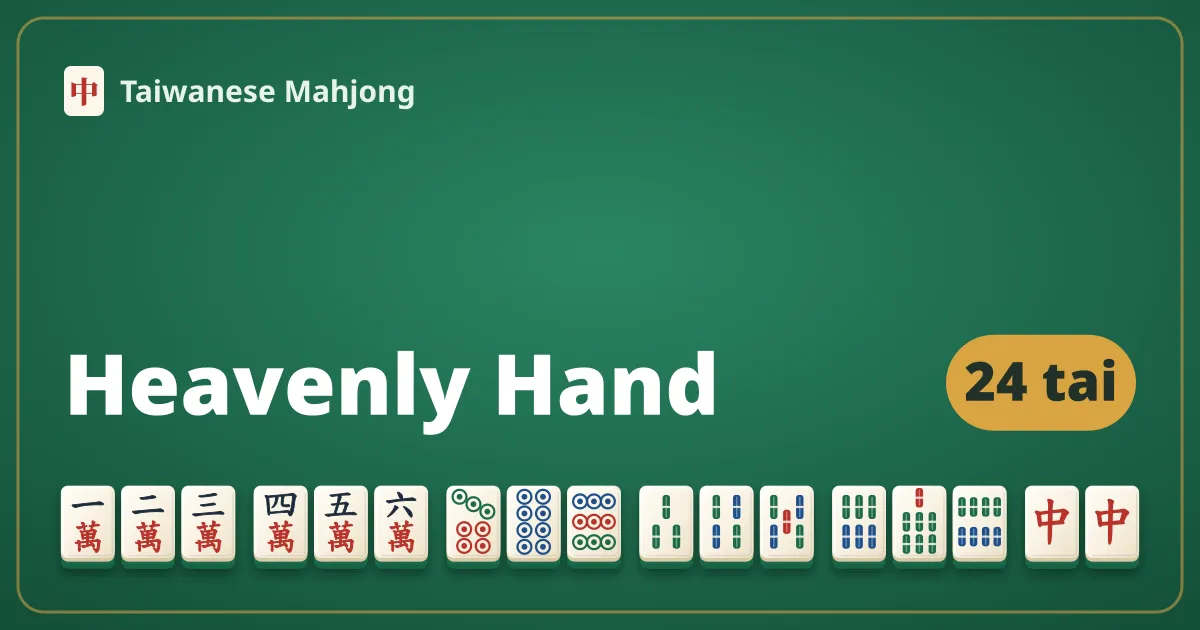 Heavenly Hand 24 tai
The dealer wins on the deal, 24 tai: no self-draw or concealed tai on top, and the exact odds are about one in a million.